
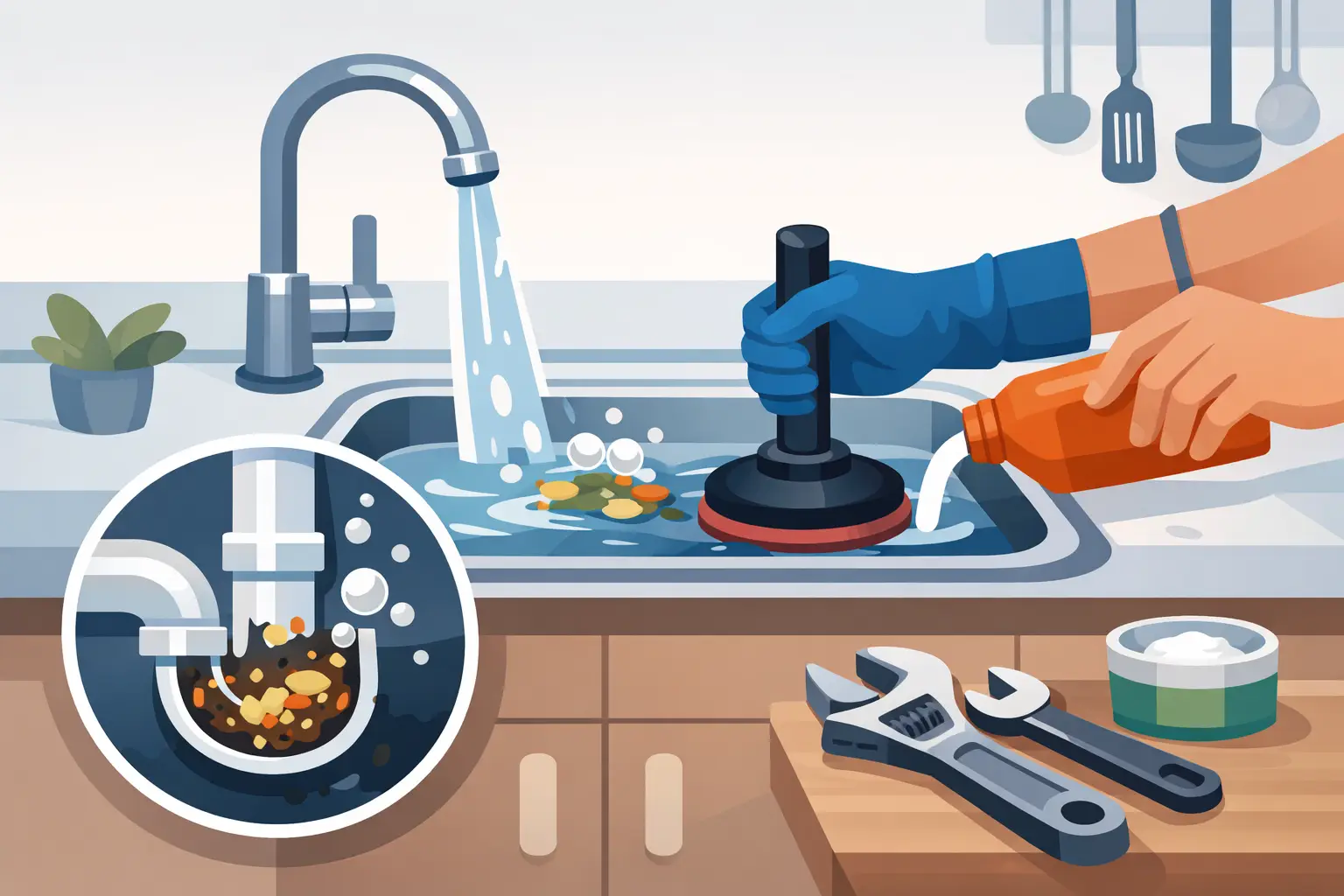
A kitchen sink that drains slowly can turn meal preparation and cleanup into a frustrating task within minutes. Knowing how to unblock kitchen drain clogs safely can often restore normal flow without damaging your pipes, flooding the cabinet below the sink, or exposing yourself to harsh chemicals.
Most kitchen drain blockages develop gradually. Cooking grease cools and sticks to the pipe walls, then catches food particles, coffee grounds, soap residue, and debris. The right first step depends on whether the sink is simply slow, completely backed up, or sending water into a second sink basin.
Start With a Safe Assessment
Before attempting to clear the drain, stop using the sink and remove any standing dishes or items from the cabinet below. If there is water in the basin, scoop out as much as possible into a bucket. This gives you a clearer view of the drain and prevents dirty water from spilling when you remove a drain component.
Check whether the issue is limited to the kitchen sink. If water is also backing up in nearby floor drains, a dishwasher connection, or another sink, the blockage may be farther along in the shared waste line. In an apartment building, that can require professional diagnosis rather than a simple at-home fix.
Avoid mixing drain cleaners or pouring another product into a drain that already contains chemicals. Chemical reactions can create harmful fumes and may damage pipe joints, especially in older plumbing systems. If someone has already used a chemical cleaner, wear gloves and eye protection and tell a plumbing technician before any work begins.
How to Unblock a Kitchen Drain With Simple Methods
For a minor grease or food buildup, begin with the least aggressive method. Fill a kettle or pot with water, bring it to a boil, and pour it slowly into the drain in two or three stages. Wait a few seconds between pours. Hot water can soften fresh grease deposits, but it is not a cure for a solid or deep blockage.
Use this method carefully if you have PVC pipes. Very hot water is usually fine in reasonable amounts, but repeated large volumes of boiling water can place unnecessary stress on older plastic fittings. Warm-to-hot water is the safer choice when you are unsure of the pipe material.
If the drain remains slow, try dish soap and hot water. Add a generous squeeze of grease-cutting dish soap to the drain, wait about 10 minutes, then follow with hot water. The soap helps loosen oils that may be coating the inside of the pipe. This works best when the water is still draining, even if slowly.
A plunger is the next practical option. Use a clean sink plunger rather than one used for a toilet. If you have a double-basin sink, seal the second drain opening firmly with a wet cloth or stopper. Add enough water to cover the plunger cup, place it over the drain, and make 15 to 20 steady plunges. The goal is to create pressure and suction inside the pipe, not to force water around the edge of the cup.
Test the drain with a small amount of water after plunging. If it begins to flow, run warm water for a few minutes to carry loosened residue farther through the line.
Clean the Sink Trap When the Clog Is Close
When plunging does not help, the blockage may be in the P-trap – the curved pipe section directly beneath the sink. This component holds water to prevent sewer odors from entering the room, and it is also a common place for food debris and grease to collect.
Place a bucket and several old towels underneath the trap. Put on gloves, then carefully loosen the slip nuts at each end of the curved section. Water and debris will drain into the bucket. Remove the trap, clear out any buildup, and rinse the part before reinstalling it.
Inspect the washers as you work. A warped, cracked, or misplaced washer can cause a leak after the trap is put back. Tighten slip nuts by hand first, then test the sink with water. Do not overtighten plastic fittings, as excessive force can crack the threads or make future servicing difficult.
If the P-trap is clear but the sink still will not drain, use a small hand-crank drain snake in the pipe leading into the wall. Feed it gently, turning the handle as you advance. Pull it out slowly and clean off any debris. Do not force a cable if it hits a hard obstruction, particularly in a building with older or concealed piping. Forcing the tool can damage a joint or push the clog farther into the system.
What Not to Put Down a Kitchen Sink
Preventing the next blockage is usually easier than clearing the current one. Even a garbage disposal, where installed, does not make every food item safe for the drain. These materials commonly cause kitchen sink blockages:
- Cooking oil, grease, butter, and fat
- Coffee grounds and loose tea leaves
- Rice, pasta, flour, and dough
- Eggshells, fibrous vegetable peelings, and bones
- Large pieces of food or paper towels
Allow cooking fat to cool in a container and dispose of it with regular waste rather than rinsing it away. Wipe greasy pots and plates with a paper towel before washing them. A sink strainer is also a simple, cost-effective barrier that catches food scraps before they enter the pipe.
When a Kitchen Drain Needs Professional Help
A recurring clog is a signal to look beyond the visible sink drain. Repeated backups may indicate a buildup farther down the line, a poorly sloped pipe, a damaged pipe section, or an issue affecting a shared drainage connection. Clearing the trap every few weeks may bring temporary relief, but it will not correct the underlying cause.
Call a qualified plumbing technician if the sink is completely blocked after basic attempts, water backs up into another fixture, there is a sewage odor, or you notice leaking beneath the cabinet. Professional drain cleaning equipment can remove deeper obstructions without relying on corrosive chemicals. A technician can also inspect connections, identify damaged seals, and confirm that the drain line is flowing as it should.
For landlords, office managers, and commercial kitchens, prompt action matters even more. A blocked kitchen drain can interrupt daily operations, create slip hazards, attract pests, and cause water damage to cabinetry or flooring. Scheduling maintenance early is generally less disruptive and less costly than waiting for an overflow.
Dynafix Technical Services can assess stubborn kitchen drain problems, clear blockages safely, and address the plumbing faults that make them return. For urgent backups, a prompt professional response helps protect your property and gets your kitchen working again.
A clear kitchen drain is not just about convenience at the sink. It helps keep the space clean, reduces unwanted odors, and gives you one less maintenance problem to manage when your day is already full.