
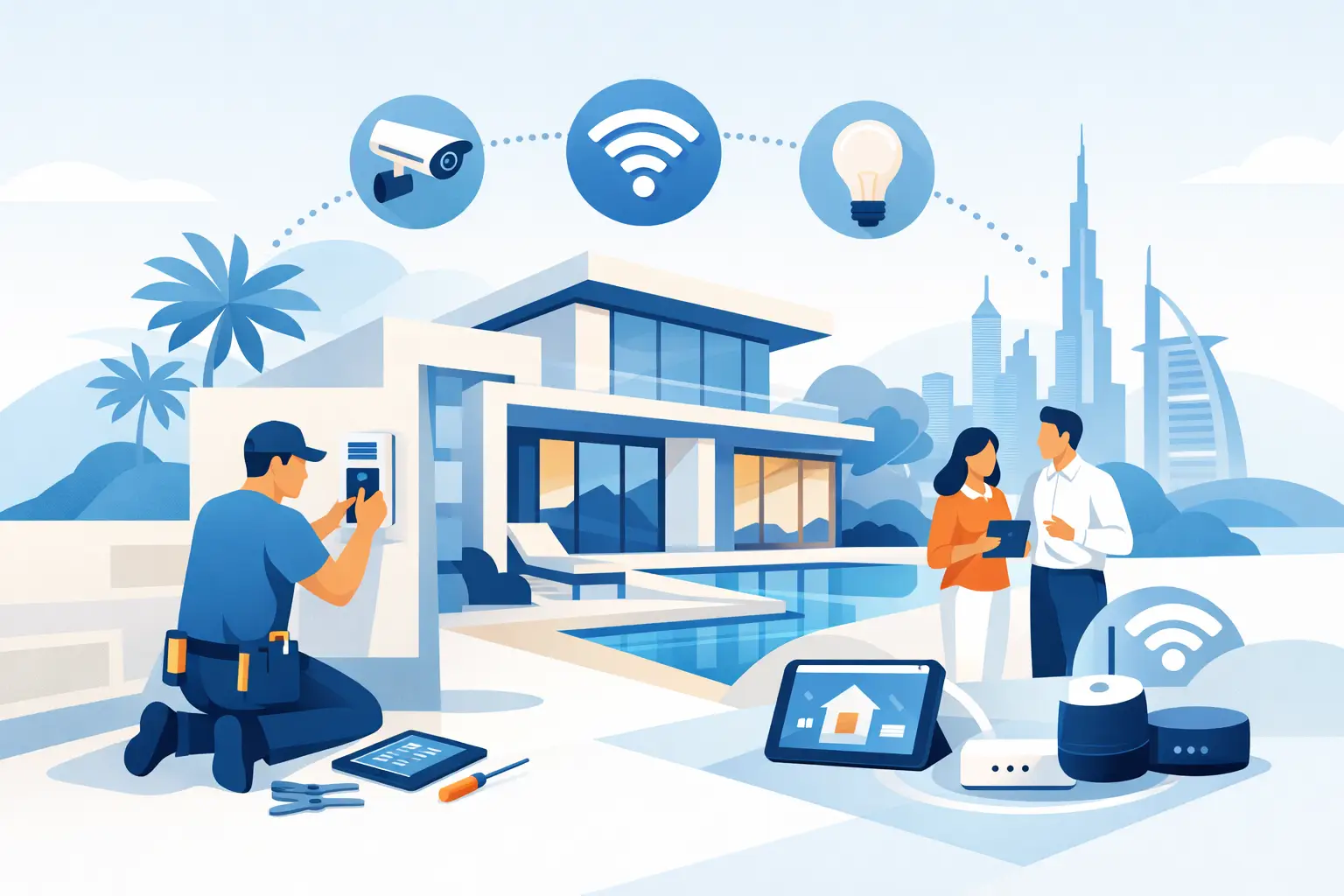
A smart home should make life easier the moment you walk through the door. For Dubai homeowners, tenants, landlords, and facility managers, a professional smart home automation installation Dubai service can bring lighting, climate control, security, entertainment, and access controls into one reliable system – without turning the property into a collection of confusing apps and unreliable devices.
The difference is in the planning. A well-designed installation considers how the space is used, what systems are already in place, where wiring can be routed safely, and which controls will remain practical for everyone in the home or workplace. Whether you are upgrading a villa, fitting out a new apartment, or improving an office, the goal is simple: greater comfort, better control, and fewer daily tasks to manage.
What Smart Home Automation Can Control
Smart automation is not limited to switching lights on and off from a phone. It can connect selected systems so they respond to schedules, occupancy, temperature, time of day, or a single command.
For a Dubai home, climate control is often one of the most valuable applications. Smart thermostats and compatible AC controls can help manage cooling across different rooms, reduce unnecessary operation in unoccupied areas, and allow settings to be adjusted before you arrive home. The right setup depends on the existing AC system and its controls, so compatibility should be checked before equipment is selected.
Lighting automation can make a property more comfortable and energy-conscious. Scene settings can adjust brightness for dinner, work, entertainment, or nighttime movement. Timers can switch outdoor lights on at sunset, while motion sensors can support safer access in hallways, stairwells, entrances, and parking areas.
Security and access are also common priorities. Smart door locks, video doorbells, cameras, gate controls, and door sensors can provide visibility and control when you are away. For landlords and office managers, controlled access can be especially useful when managing tenants, staff, service providers, or multiple users.
Other options may include motorized curtains and blinds, audiovisual controls, smart plugs, water-leak sensors, smoke detectors, and intercom integration. Not every property needs every feature. A practical system starts with the functions that solve genuine daily problems.
Start With How the Property Is Used
The best smart home automation installation in Dubai is built around routines, not products. A family villa, a rental apartment, a retail store, and a busy office have very different requirements.
A villa owner may want room-by-room AC scheduling, garden lighting, gate access, CCTV monitoring, and curtain control. An apartment resident may prefer simple lighting scenes, a smart lock, and AC control that can be managed remotely. A commercial customer may need staff access control, meeting-room lighting, energy monitoring, and automated shutdown settings outside business hours.
Before installation, it helps to identify four practical points:
- Which daily tasks are inconvenient, repetitive, or easy to forget?
- Which systems need remote access when the property is empty?
- Who will use the controls, including children, guests, tenants, or employees?
- What should still work easily if the internet connection is temporarily unavailable?
These answers help prevent overcomplicating the project. A system with fewer, well-selected functions is usually more useful than one filled with features no one uses after the first month.
Wired, Wireless, or a Combined System?
Wired automation systems are often a strong choice for new builds, major renovations, villas, and commercial fit-outs. They can offer dependable communication and a cleaner long-term installation when cabling is planned before walls and ceilings are finished. However, they generally require more preparation and may add cost and disruption in an occupied property.
Wireless systems are often suitable for apartments, rental properties, and upgrades where opening walls is not practical. They can be installed with less disruption and expanded over time. Their performance depends on device quality, signal coverage, network design, and battery maintenance for certain products.
Many properties benefit from a combined approach. For example, essential lighting circuits and network equipment may be wired, while selected sensors, switches, and room controls operate wirelessly. A qualified technician can assess the electrical layout, Wi-Fi coverage, and installation constraints before recommending the right approach.
Electrical and Network Work Must Be Planned Properly
Smart devices depend on the systems behind them. Poor wiring, overloaded circuits, weak Wi-Fi, or incorrectly placed equipment can cause interruptions that make automation frustrating rather than helpful.
Electrical safety comes first. Smart switches, dimmers, relays, and control panels must be compatible with the existing electrical installation and installed correctly. Some devices require a neutral wire, specific load ratings, or compatible LED drivers. Installing equipment without checking these requirements can cause flickering lights, damaged components, or unsafe connections.
Network planning matters just as much. Cameras, doorbells, voice assistants, hubs, and smart TVs can place added demand on a home or office network. Larger villas and commercial spaces may need access points positioned to provide reliable coverage throughout the property. Equipment should not be hidden inside metal cabinets, crowded electrical panels, or locations where heat and signal interference may affect performance.
For systems that monitor security or control access, consider power backup and safe manual operation. Smart locks should still allow authorized entry if batteries are low. Automated curtains should have suitable override options. Critical functions should not leave occupants stranded during a power or network interruption.
Choose Controls People Will Actually Use
A smart property should not require everyone to learn a new routine. Phone apps are useful, but physical wall switches, remotes, keypads, and voice controls may all have a place depending on the occupants.
For example, a guest should be able to turn on lights without searching for an app. An elderly family member may prefer a simple keypad with clear labels. An office manager may need centralized controls and user permissions, while staff only need access to specific rooms or functions.
Scenes are particularly helpful when they are kept simple. A “Leaving Home” scene could turn off selected lights, adjust AC settings, close motorized curtains, and arm chosen security devices. A “Good Night” scene could reduce lighting, secure entry points, and set bedroom temperatures. The exact actions should reflect your preferences, not a preset template.
Security, Privacy, and User Access
Connected devices should be treated as part of the property’s security setup. Use strong, unique passwords for automation accounts, enable two-factor authentication where available, and keep device software updated. Avoid sharing a single administrator login with everyone who needs access.
User permissions are important for rental properties and workplaces. A cleaner may need temporary access to a smart lock but should not be able to change camera settings. A tenant may need control of lighting and AC but should not retain access after moving out. Clear access management makes the system safer and easier to maintain.
Camera placement also deserves careful thought. Cameras should support security without unnecessarily recording private areas. In commercial settings, management should consider staff privacy expectations and applicable building policies before installation.
Why Professional Installation Saves Time Later
Do-it-yourself smart devices can work well for small upgrades, such as a plug-in lamp controller or a single speaker. Once automation involves mains electricity, AC controls, security equipment, multiple rooms, gates, or integrated scenes, professional installation becomes the safer and more efficient choice.
An experienced technical team can inspect the property, confirm device compatibility, safely complete electrical work, configure the network, test each function, and explain how the system works before handover. Just as importantly, they can identify problems in the existing electrical or network setup that may affect performance.
Dynafix Technical Services LLC can support smart automation projects alongside electrical repairs, AC maintenance, and general property upkeep. This is useful when automation work involves more than one trade, such as adding smart AC control during an electrical upgrade or installing sensors while resolving a leak-prone utility area.
Plan for Maintenance and Future Changes
Automation is not strictly a one-time project. Batteries need replacement, device software may need updates, Wi-Fi equipment can age, and household or business needs can change. Keep a record of installed devices, control locations, account ownership, and warranty details. If a property is sold or leased, access should be transferred properly and previous users removed.
It is also wise to leave room for expansion. You may begin with lighting and climate control, then later add security, curtain motors, or outdoor systems. Choosing compatible equipment and allowing capacity in the network and electrical plan can make future improvements more cost-effective.
A well-planned smart home does not compete for your attention. It quietly supports a cooler, safer, more comfortable property while keeping everyday control simple for the people who use it.