
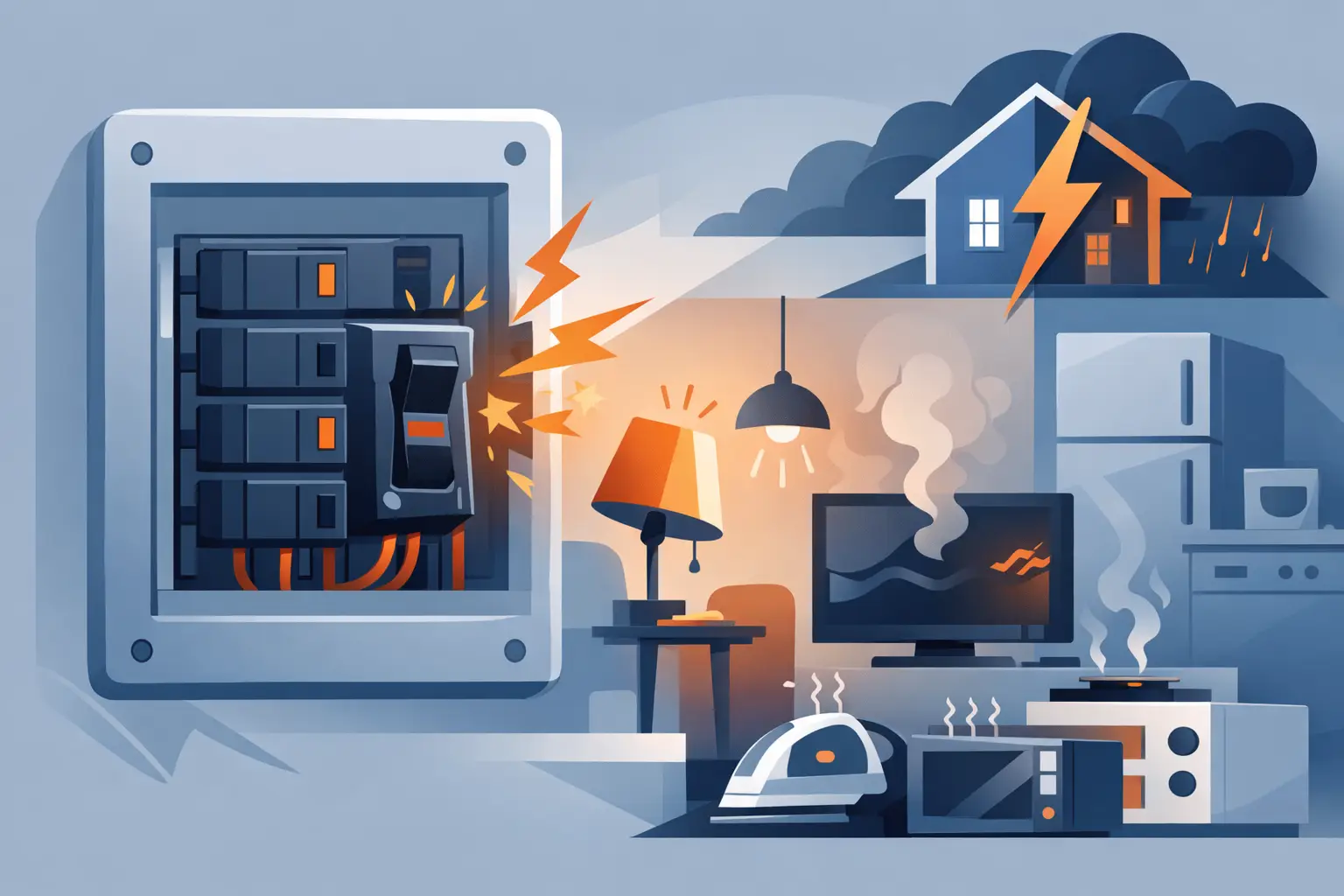
A circuit breaker keeps tripping when it detects a condition that could overheat wiring, damage equipment, or create a shock or fire risk. It can be frustrating when the lights go out or the AC stops mid-day, but the breaker is doing its job: cutting power before a small electrical fault becomes a serious property problem.
The right response depends on what is connected to the circuit, when the trip happens, and whether there are warning signs such as burning smells, heat, buzzing, or damaged outlets. Some causes are straightforward. Others require prompt attention from a qualified electrician.
What it means when a circuit breaker keeps tripping
Your electrical panel divides a property into separate circuits. Each circuit is designed to safely carry only a certain amount of electrical current. When the current becomes too high, or when the breaker senses a fault, it trips to stop the flow of electricity.
A breaker that trips once after several high-demand appliances run at the same time may be dealing with an overload. A breaker that trips repeatedly, trips immediately after being reset, or affects equipment that has been working normally may point to a wiring fault, a failing appliance, moisture, or a worn breaker.
Do not keep resetting a breaker to force power back on. Repeated resets can allow a fault to continue and may make the eventual repair more difficult to diagnose.
The most common reasons breakers trip
An overloaded circuit
Overloading is one of the most common causes in homes, apartments, offices, and retail spaces. It happens when too many devices draw power from the same circuit at once. Portable heaters, kettles, microwaves, hair dryers, irons, washing machines, and window AC units can each place a significant demand on a circuit.
For example, a kitchen outlet circuit may trip when a microwave, coffee maker, and electric kettle operate together. In an office, multiple monitors, printers, chargers, and a portable heater connected through extension strips can produce the same result.
Turn off and unplug some equipment before resetting the breaker. If the circuit stays on after reducing the load, avoid returning to the same setup. The practical long-term solution may be redistributing equipment, installing a dedicated circuit for a high-demand appliance, or upgrading electrical capacity where appropriate.
A short circuit
A short circuit occurs when a live wire contacts a neutral wire or another unintended conductive path. This creates a sudden surge of current, so the breaker trips quickly. A short may be caused by damaged insulation, loose connections, pinched cables, a faulty outlet, or internal damage in an appliance.
You may notice a breaker trip immediately when a specific appliance is plugged in or switched on. Sometimes there may be a popping sound, a scorched mark, or a burning odor. Stop using the appliance or outlet involved, leave the breaker off, and arrange professional inspection. Do not open outlets, switches, or the electrical panel unless you are qualified to do so.
A ground fault or moisture problem
A ground fault happens when electrical current takes an unintended path to ground. These faults are more likely in bathrooms, kitchens, laundry areas, outdoor spaces, utility rooms, and anywhere water or humidity may reach electrical components.
Ground-fault circuit interrupter, or GFCI, outlets and breakers are designed to react quickly because moisture raises the risk of electric shock. If a GFCI trips after heavy rain, cleaning, a plumbing leak, or use of an outdoor outlet, do not treat it as a nuisance. Water may have entered an outlet box, appliance, conduit, or connection.
Drying an area you can safely access is not the same as confirming the electrical installation is safe. Persistent tripping after moisture exposure needs an electrician, particularly if water has been near the panel, ceiling fixtures, or concealed wiring.
A faulty appliance or device
An appliance can be the source of the issue even when it appears to operate normally. Aging motors, damaged cords, failing heating elements, and internal wiring faults may trip a breaker only when the appliance reaches a certain stage of operation.
A simple, safe check can narrow down the cause. Unplug all items on the affected circuit, reset the breaker once, then reconnect devices one at a time. If the breaker trips when a particular device is connected or turned on, unplug it and do not use it until it has been inspected or replaced.
This approach does not rule out a wiring issue, especially if the breaker trips with everything unplugged. It does, however, give a technician useful information and helps prevent unnecessary disruption.
A failing breaker, outlet, or wiring connection
Breakers do not last forever. Age, heat, corrosion, loose terminal connections, and repeated overloading can affect their performance. An older breaker may trip too easily, fail to reset properly, or feel hot. Loose wiring at an outlet, switch, junction box, or panel can also generate heat and intermittent faults.
Warning signs include flickering lights, outlets that feel warm, crackling or buzzing sounds, discolored faceplates, a burning smell, or breakers that will not remain in the ON position. These are not DIY troubleshooting situations. Switch off the affected circuit if it is safe to do so and contact a qualified electrical professional promptly.
Arc-fault protection detecting damaged wiring
Many modern properties use arc-fault circuit interrupter, or AFCI, protection. An arc is an unintended electrical discharge that can occur through damaged wires or loose connections. Unlike a typical overload, an arc may not draw enough current to trip a standard breaker, yet it can create dangerous heat.
An AFCI may trip because of a worn appliance cord, a loose outlet connection, damaged wiring behind a wall, or occasionally electrical noise from certain equipment. Because the cause can be difficult to identify without proper test equipment, recurring AFCI trips should be assessed by an electrician rather than bypassed or replaced with a standard breaker.
What you can safely check before calling for help
Start by identifying the affected area and what stopped working. Check whether only one outlet, one room, or several circuits have lost power. Then turn off or unplug devices on the affected circuit.
At the panel, look for a breaker sitting between the ON and OFF positions. Move it fully to OFF first, then reset it to ON once. If it holds, reconnect only essential devices gradually. If it trips again immediately, leave it off.
Avoid using extension cords as a permanent fix for overloaded rooms. Do not replace a breaker with one of a higher rating simply to stop nuisance trips. The wiring and outlets on that circuit may not be rated for the additional current, creating a hidden overheating hazard.
When to call an electrician immediately
Some situations need urgent professional attention rather than further testing. Call for help if you notice burning, smoke, sparks, heat at the panel or outlets, visible damaged wiring, repeated tripping with nothing plugged in, water near electrical equipment, or a breaker that will not reset.
Commercial properties should also act quickly when a tripping circuit affects refrigeration, essential lighting, IT systems, security equipment, ventilation, or customer-facing operations. A qualified technician can test the circuit, inspect connections, identify the fault, and recommend a repair that supports safe, reliable operation rather than a temporary reset.
Preventing future breaker trips
Good electrical habits reduce avoidable trips. Keep high-demand appliances on suitable circuits, replace damaged cords promptly, avoid overloading power strips, and have older electrical systems checked before adding major loads such as new AC equipment, kitchen appliances, or office workstations.
Planned maintenance is particularly valuable for villas, rental properties, offices, and facilities with heavy daily usage. Periodic inspection can identify loose connections, aging outlets, panel concerns, and load issues before they interrupt comfort or operations.
A tripped breaker is a safety message, not an inconvenience to override. Treat it with care, use only the safe checks above, and bring in a qualified electrician whenever the cause is unclear or the problem returns.