
A breaker that trips every time the water heater runs is not necessarily faulty. It may be reacting exactly as designed – but the reason it trips determines whether you are dealing with an overload, a short circuit, or a potentially dangerous current leak. In the RCCB versus MCB breakers discussion, the key point is simple: these devices protect against different electrical faults, and one does not replace the other.
For homeowners, tenants, landlords, and facility managers, understanding the distinction helps make electrical repair decisions safer and clearer. It also prevents a common but risky response to repeated tripping: resetting a breaker without investigating why it opened in the first place.
RCCB Versus MCB Breakers: The Core Difference
An MCB, or miniature circuit breaker, protects a circuit and its wiring from overcurrent. Overcurrent occurs when a circuit carries more electricity than it is designed to handle. This may result from too many appliances on one circuit or from a short circuit caused by damaged insulation, loose wiring, or a failed appliance.
An RCCB, or residual current circuit breaker, monitors the balance of electricity flowing into and out of a circuit. If it detects that some current is leaking elsewhere – potentially through damaged wiring, moisture, metal equipment, or a person – it disconnects the supply quickly. Its main purpose is reducing the risk of electric shock and helping identify earth-leakage faults.
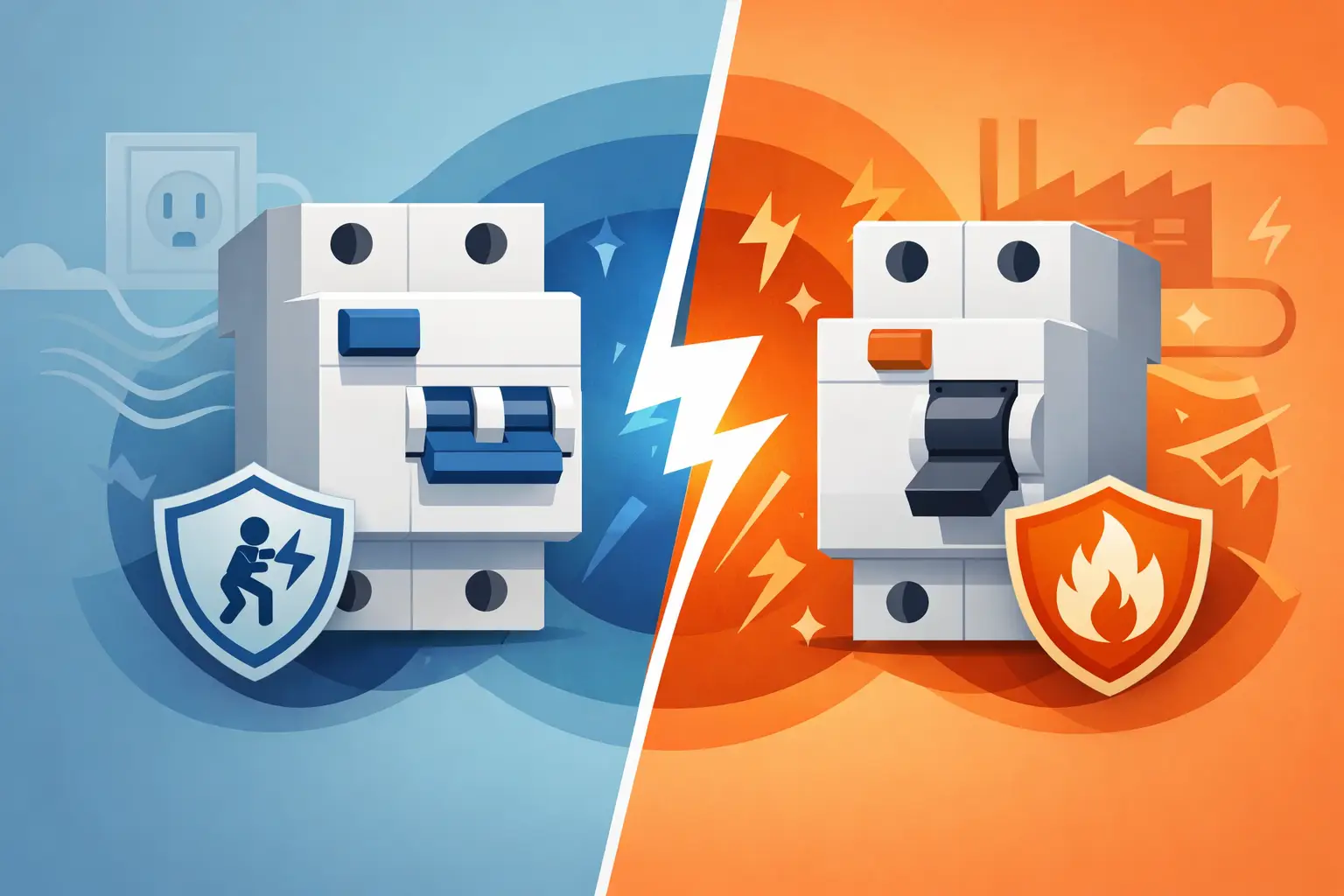
Put simply, an MCB protects cables and equipment from excessive current. An RCCB protects people and property from leakage current that may create a shock or fire hazard. A well-designed electrical distribution board commonly uses both.
What an MCB Does
Every electrical circuit has a safe current limit. A lighting circuit, for example, requires a different protective rating than a circuit serving high-load equipment such as an oven, water heater, or air-conditioning unit. The MCB is selected to suit the cable size, circuit design, and expected load.
When an overloaded circuit runs too long, its wiring can overheat. Insulation may deteriorate, connections can fail, and the risk of electrical damage rises. An MCB detects this sustained excess current through a thermal mechanism and trips to stop the supply.
It also responds much faster to a short circuit. If a live conductor contacts a neutral conductor or earth due to a fault, current can rise sharply in an instant. The MCB’s magnetic trip mechanism disconnects the circuit to limit damage.
Common signs that may point to an MCB-related issue include a breaker tripping when several appliances operate at once, a particular appliance causing an immediate trip, warm outlets, flickering lights, or a burning smell near a switch, outlet, or panel. These symptoms need professional assessment, especially if the breaker will not remain on after a reset.
An MCB does have an important limitation: it may not trip when a small amount of current leaks to earth. That leakage could still be enough to create a serious electric-shock risk. This is where an RCCB becomes essential.
What an RCCB Does
An RCCB compares the current traveling through the live and neutral conductors. Under normal operation, the amount flowing out should equal the amount returning. If there is a difference, electricity is escaping from the intended path.
This can happen when moisture enters an appliance, a cable is damaged, insulation breaks down, or an electrical component develops an internal fault. In bathrooms, kitchens, laundry areas, outdoor spaces, and locations with water pumps or water heaters, leakage protection is particularly valuable because moisture increases the chance of faults and shock hazards.
Many RCCBs are designed to trip at a low residual-current threshold intended for personal protection. However, the correct device and sensitivity depend on the installation, applicable regulations, equipment connected, and the electrical design of the property. A qualified electrician should confirm suitability rather than selecting a device based only on its amp rating or a neighbor’s setup.
An RCCB will not reliably protect against an overload or short circuit on its own. If a cable carries excessive current but no earth leakage is present, the RCCB may not detect the problem. That is why fitting an RCCB without appropriate MCB protection is incomplete protection.
Why Both Devices Matter in a Property
Electrical faults are not all alike. A power strip overloaded with several high-wattage appliances creates an overcurrent concern. A damaged washing machine with moisture affecting its internal wiring may create an earth-leakage concern. The first scenario calls for MCB protection; the second requires RCCB protection.
In a residential property, these devices are usually installed in or near the main distribution board. Individual MCBs may protect separate circuits for lighting, outlets, kitchen equipment, AC systems, and other loads. An RCCB may protect a group of circuits, depending on the design of the panel.
In commercial spaces, circuit planning can be more complex. Offices may have dedicated circuits for server equipment, pantry appliances, lighting zones, and air conditioning. Retail and facilities environments may also include signage, pumps, refrigeration, or specialized equipment. Proper separation of circuits helps reduce unnecessary shutdowns and makes fault finding more efficient.
There is a trade-off to consider. A single RCCB protecting many circuits can provide broad safety coverage, but one earth-leakage fault may shut down a large section of the property. Separating circuits appropriately can improve continuity and simplify diagnosis. The right approach depends on the property size, load profile, panel capacity, and local electrical requirements.
RCCB, MCB, and RCBO: A Practical Distinction
You may also see an RCBO in newer or upgraded electrical panels. An RCBO combines residual-current protection with overcurrent and short-circuit protection in one device. In practical terms, it performs the functions of both an RCCB and an MCB for the circuit it serves.
RCBOs can be especially useful where limiting disruption matters. If one circuit develops an earth-leakage fault, only that circuit trips rather than a larger group of circuits. This can be helpful in villas, apartments, offices, and commercial units where losing power to multiple areas creates inconvenience or operational disruption.
That said, an RCBO upgrade is not automatically necessary for every property. Existing panels vary in layout, available space, wiring condition, and compatibility. A technician should inspect the distribution board and identify the cause of any recurring tripping before recommending changes.
What to Do When a Breaker Keeps Tripping
A tripping breaker is a safety signal, not an inconvenience to work around. Avoid repeatedly forcing it back on, replacing it with a higher-rated device, or attempting panel repairs yourself. A higher-rated MCB on undersized wiring can allow cables to overheat before protection operates.
Start by turning off or unplugging appliances on the affected circuit. If the breaker holds after the load is removed, reconnect items one at a time to help identify a possible faulty appliance. If it trips immediately with nothing connected, or if you notice heat, scorching, buzzing, a burning odor, or signs of water near electrical equipment, leave the circuit off and arrange an urgent inspection.
For an RCCB trip, the fault may be on any circuit it protects. A qualified electrician can isolate circuits, test insulation resistance, inspect connections, and check appliances or equipment for leakage. This methodical testing is safer than trial-and-error resets and is the best way to avoid recurring failures.
Choosing the Right Protection for Your Property
The correct breaker setup is not about choosing RCCB or MCB. It is about ensuring each circuit has suitable protection for overloads, short circuits, and earth leakage. Ratings must match the cable, connected load, and intended use of the circuit. Installation quality matters just as much as the device itself: loose terminations, overloaded circuits, damaged cables, and moisture intrusion can all compromise electrical safety.
If you are renovating, adding high-load appliances, installing a new AC unit, upgrading a kitchen, or experiencing repeated electrical trips, request a professional assessment of the panel and connected circuits. Dynafix Technical Services LLC can help identify faults, explain the findings clearly, and carry out electrical repairs or upgrades with safety and property reliability in mind.
A breaker that trips is often preventing a larger problem. Treat it as an early warning, and let a qualified technician determine whether your property needs a circuit repair, load adjustment, appliance check, or a more suitable protection arrangement.