
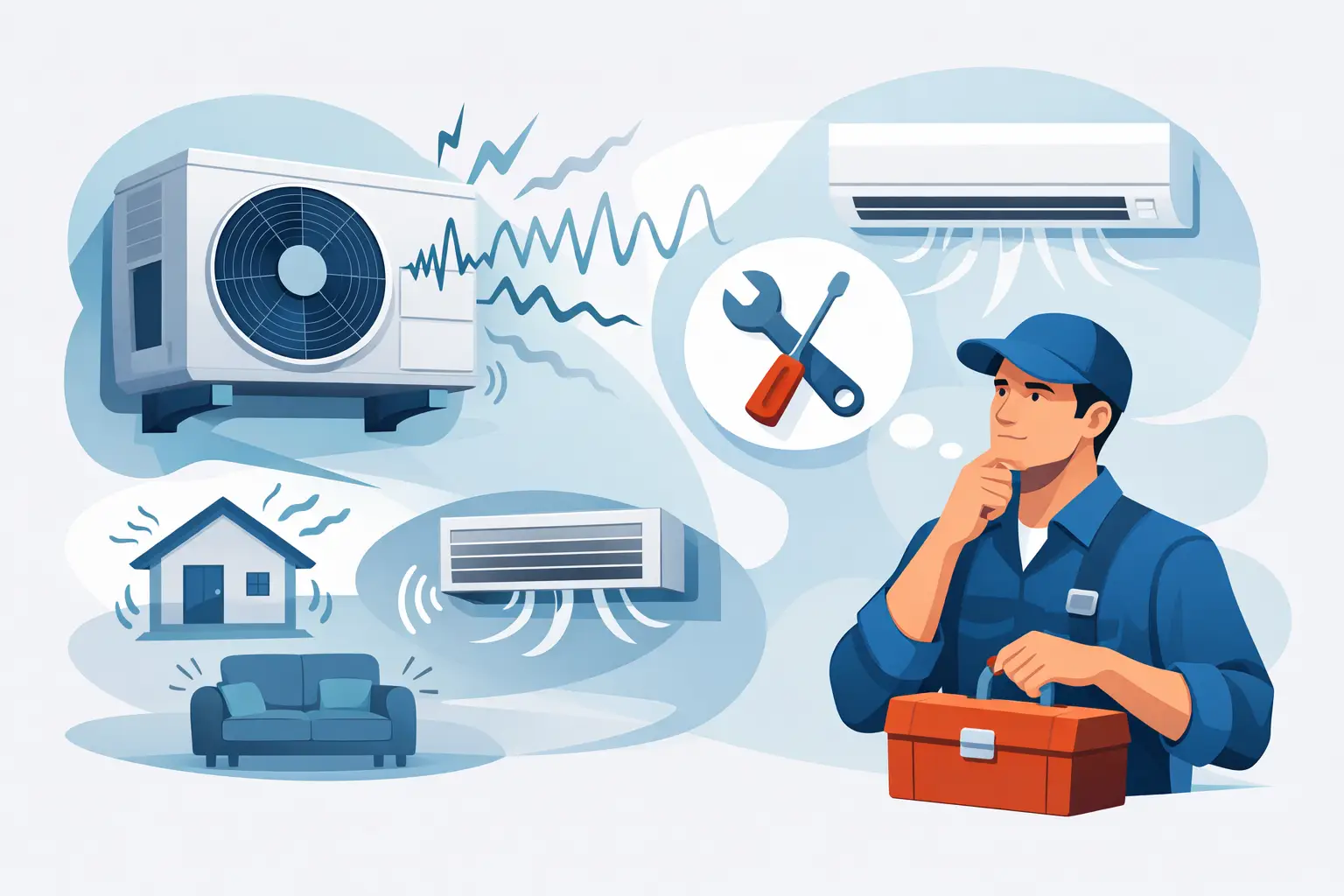
A cooling system that suddenly rattles through a quiet room or squeals when it starts is asking for attention. AC noise causes range from a simple loose panel to a failing motor or refrigerant issue, and the sound alone can offer a useful clue. In Dubai’s long cooling season, waiting for an unusual noise to become a breakdown can mean losing comfort when you need it most.
Why an AC’s Sound Matters
No air conditioner is completely silent. You may hear a soft airflow from supply vents, the low hum of a running compressor, or a brief click as the thermostat signals the unit to start and stop. These are normal operating sounds.
What is not normal is a new, persistent, or increasingly loud sound. Mechanical parts work under considerable strain, especially when an AC runs for extended periods in high outdoor temperatures. A small vibration can loosen a fitting. A worn bearing can place extra load on a motor. Left unaddressed, an early warning sound may lead to reduced cooling, higher energy use, water leaks, or a complete system failure.
The right response depends on the sound, where it is coming from, and whether the system is still cooling properly. Turning up the thermostat and hoping the issue disappears is rarely a cost-effective plan.
Common AC Noise Causes by Sound
Banging or clanking
A sharp banging or metal-on-metal clanking noise often points to a loose or damaged component. Inside an outdoor condenser, a fan blade may be bent, loose, or striking its housing. In older systems, compressor components can also become loose internally.
Banging from an indoor unit may be caused by a blower wheel that has shifted or accumulated debris. Ductwork can also make a brief popping sound as it expands and contracts with temperature changes. Occasional duct movement is usually not serious, but repeated loud bangs deserve an inspection.
Turn the AC off if the noise is severe or continues while the unit runs. Continuing operation could damage the fan, coil, cabinet, or compressor.
Rattling or vibrating
Rattling is among the more common and sometimes less serious AC sounds. Loose access panels, screws, mounting hardware, or nearby objects can vibrate when the equipment starts. An outdoor unit installed on an uneven base may also transmit vibration into the wall, floor, or surrounding structure.
However, rattling can also indicate a loose fan assembly, worn motor mounts, or debris inside the condenser. Leaves, small stones, and other debris can enter outdoor equipment and interfere with moving parts. Never reach through the protective grille while the unit has power.
A technician can secure panels, check mounting points, clear debris safely, and confirm that internal components have not been affected. Addressing a minor rattle early is usually far easier than replacing a damaged fan motor later.
Squealing or screeching
A high-pitched squeal or screech should not be ignored. Depending on the system design, it can be linked to a worn belt, dry motor bearings, or a failing blower or condenser fan motor. Belt-driven systems are less common in many modern residential units, but they are still found in some commercial equipment and older installations.
If the sound begins only at startup and then disappears, the equipment may still need service. If it continues throughout the cooling cycle, switch the system off and arrange a professional inspection. Motor failure can leave the unit unable to circulate air or reject heat effectively.
Hissing or bubbling
Hissing deserves prompt attention because it may signal a refrigerant leak. Refrigerant travels through a sealed system, so it should not escape during normal operation. A leak can produce a faint hiss near refrigerant lines or the indoor coil. Bubbling or gurgling may occur when air enters the refrigerant line through a leak.
Low refrigerant affects cooling performance and can cause the compressor to work harder. It is not a problem solved by simply adding more refrigerant. A qualified technician should locate the leak, repair it where practical, test the system, and charge it to the correct specification.
A gentle hiss near an air vent can also be caused by airflow through a narrow gap or a partially closed vent. The location and timing of the sound matter, which is why a proper diagnosis is better than guessing.
Clicking
A single click when the AC starts or stops is generally normal. Relays, contactors, and thermostat controls make brief clicking sounds as they operate. Repeated clicking, rapid clicking, or clicking combined with a unit that will not start can indicate an electrical problem.
Possible causes include a failing capacitor, worn contactor, damaged relay, thermostat fault, or wiring issue. Electrical components should be handled only by trained professionals. Do not remove access covers or attempt to reset breakers repeatedly. If a breaker trips, leave the system off until the cause has been checked.
Buzzing or humming
A soft, steady hum is expected while the equipment is running. A loud buzzing or an increasingly noticeable hum is different. It can be associated with loose wiring, a failing capacitor, a stuck relay, compressor trouble, or debris around the outdoor fan.
Buzzing may also happen when an electrical connection is loose. Because electrical faults can create safety risks as well as equipment damage, turn off the AC and request service if you notice a burning smell, visible damage, repeated breaker trips, or unusually loud buzzing.
Whistling or rushing air
Whistling from vents often means air is being forced through a restricted opening. A dirty filter, closed supply vent, blocked return grille, or poorly sized duct opening can create excess air pressure and noise. Airflow restrictions also make the system work harder and may leave some rooms warmer than others.
Start with the filter. If it is visibly dirty or overdue for replacement, install the correct size and type recommended for your system. Ensure return grilles are clear of furniture and curtains, and avoid closing multiple supply vents in an effort to direct cooling elsewhere. If whistling continues, the ductwork or airflow settings may need professional evaluation.
When You Can Take a Simple First Step
Homeowners and facility managers can safely check a few basics before booking a visit. Make sure the thermostat settings are correct, replace a dirty filter, and look for loose objects around the outdoor unit. You can also confirm that vents and return grilles are unobstructed.
Do not open sealed AC components, straighten fan blades, handle electrical wiring, or add refrigerant. These tasks require the right equipment, safety procedures, and technical knowledge. A sound that seems minor can have more than one possible cause, and incorrect repairs can make the original issue worse.
When to Turn the AC Off Immediately
Switch the system off and arrange urgent service if there is grinding, loud metal impact, persistent screeching, electrical buzzing, a burning odor, smoke, leaking water near electrical parts, or a breaker that keeps tripping. The same applies when the AC makes noise but no longer cools, or when the outdoor fan fails to run.
For commercial spaces, prompt action is especially valuable. An unresolved AC fault can disrupt staff comfort, affect customers, and place added strain on equipment that may already be working continuously. Planned maintenance helps identify worn parts, drainage issues, dirty coils, and airflow restrictions before they become urgent call-outs.
Preventing Unwanted AC Sounds
Most noise-related repairs cannot be prevented entirely, because motors, bearings, and electrical parts eventually wear. Regular servicing does reduce avoidable strain. Cleaning filters, coils, and drain components supports steady airflow. Checking fan assemblies, electrical connections, insulation, and mounting hardware helps technicians find small faults before they become disruptive.
Maintenance also protects comfort. A clean, correctly operating AC generally cools more evenly, runs more efficiently, and is less likely to fail without warning during peak demand. For properties with several units, a scheduled maintenance plan can be more practical than responding to each problem separately.
If a new sound is interrupting your comfort, record when it occurs and whether cooling changes at the same time. That detail helps a qualified technician diagnose the problem faster. Dynafix Technical Services can assess the system, explain the required work clearly, and help restore reliable cooling before a small noise becomes a major interruption.