
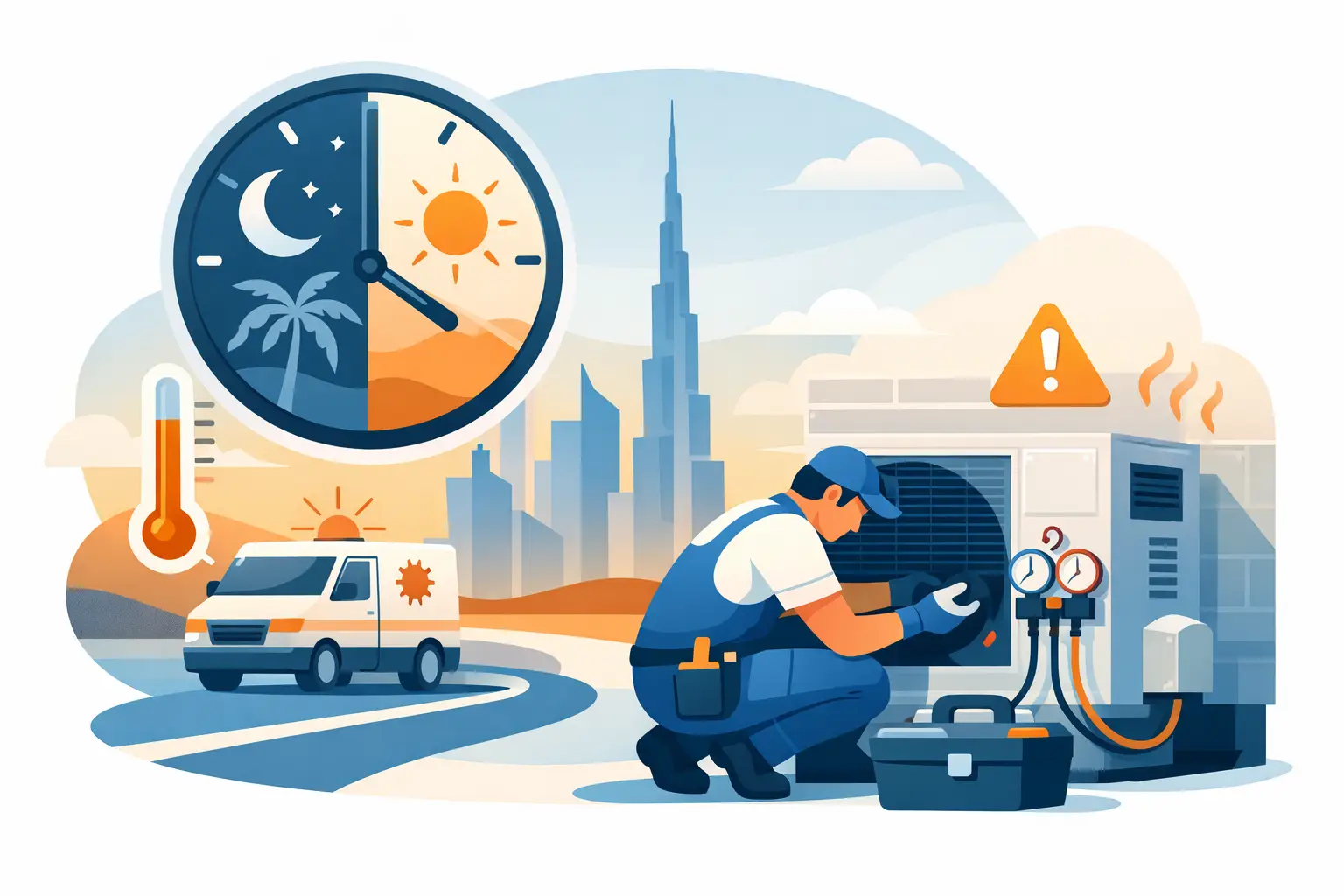
When an AC unit stops cooling in a Dubai apartment, villa, office, or shop, the problem can become urgent within hours. Reliable 24/7 emergency AC repair Dubai customers can call on is about more than restoring cool air. It is about protecting your family, staff, tenants, equipment, and property from the effects of extreme indoor heat.
A sudden breakdown is rarely convenient. It may happen after business hours, during a weekend gathering, or in the middle of the night when children, older adults, or pets are trying to sleep. Knowing what qualifies as an emergency, what to do safely before help arrives, and what a qualified technician should check can make the situation easier to manage.
When Is an AC Breakdown an Emergency?
Not every AC issue requires an immediate call-out. A system that is cooling slightly less effectively but still maintaining a safe indoor temperature may be suitable for a scheduled inspection. But some failures should not wait, especially during Dubai’s hottest months.
A complete loss of cooling in an occupied home or commercial space is a strong reason to request urgent support. The same applies when the unit is blowing warm air continuously, tripping the electrical breaker, leaking a significant amount of water, producing a burning smell, or making unusually loud grinding or buzzing sounds. These symptoms can point to electrical faults, drainage blockages, motor problems, refrigerant issues, or failing components that may worsen if the system keeps running.
For businesses, the urgency can be even higher. An AC failure in a retail store, restaurant, clinic, server room, or occupied office can affect customers, employee well-being, stock, and day-to-day operations. Fast diagnosis helps limit downtime and prevents a manageable repair from becoming a larger interruption.
What to Do Before Emergency Help Arrives
The goal is to keep people safe and avoid causing additional damage. Do not attempt to open electrical panels, recharge refrigerant, or dismantle the indoor or outdoor unit. AC systems combine electricity, moving parts, pressurized refrigerant, and drainage, so an untrained repair attempt can create a more serious fault.
Take these practical steps instead:
- Turn the thermostat off if the unit is making loud noises, smelling burnt, leaking heavily, or failing to cool. This can prevent further stress on the compressor or electrical components.
- Check the breaker only once. If it has tripped, reset it once after turning the AC off. If it trips again, leave it off and arrange professional assistance. Repeated resets can be unsafe.
- Move valuables away from water leaks. Place a container or towels under a small indoor leak if it is safe to do so, but do not ignore water near sockets, extension cords, or electrical equipment.
- Keep doors and curtains closed in the affected area to reduce heat gain. If possible, move occupants to a cooler room until the AC is assessed.
It also helps to note what happened before the failure. Did the system gradually lose cooling? Did the issue start after a power interruption? Is there ice on the indoor coil or water under the unit? Clear details help the technician begin with the most likely causes and may shorten the repair visit.
What 24/7 Emergency AC Repair in Dubai Should Include
An emergency technician should do more than restart the unit and leave. A proper visit begins with a safe assessment of the indoor unit, outdoor condenser, thermostat, electrical supply, filters, drainage line, and visible refrigerant components. The technician should identify the cause of the failure, explain it in plain language, and discuss the recommended repair before work begins.
Common emergency repairs include clearing a blocked condensate drain, replacing a failed capacitor or contactor, repairing damaged wiring, addressing thermostat faults, correcting airflow restrictions, and resolving compressor or fan motor issues. In some cases, a refrigerant leak may be suspected. A qualified technician should locate the source of the leak where possible, rather than simply topping up refrigerant and treating the symptom temporarily.
Transparent pricing communication matters during an urgent call-out. Emergency work may involve a call-out charge, parts, labor, and after-hours availability. Customers should understand what is included, what requires approval, and whether a temporary repair is being made to restore cooling while a permanent solution is arranged.
Dynafix Technical Services LLC provides emergency support through trained technicians who can assess AC faults with safety, comfort, and clear communication in mind. For customers managing several maintenance needs, one reliable provider also reduces the time spent coordinating separate AC, electrical, plumbing, and handyman vendors.
Repair or Replacement: How the Decision Is Made
A technician may be able to restore cooling quickly, but that does not always mean repair is the most cost-effective long-term answer. The right choice depends on the unit’s age, maintenance history, type of failure, energy performance, and the cost of parts.
For a relatively new, well-maintained system, replacing a capacitor, motor, sensor, drain pump, or control component is often sensible. These are common wear items, and a targeted repair can return the system to dependable operation. If the failure is linked to dirty filters, blocked ducts, or poor drainage maintenance, corrective work and a maintenance plan may prevent a repeat call-out.
Replacement becomes more worth considering when an older system has repeated compressor problems, major coil corrosion, persistent refrigerant leaks, or repair costs that are high relative to the unit’s remaining life. A new system may offer better cooling control and lower running costs, but replacement requires proper sizing and installation. Choosing the largest available unit is not automatically better. An oversized system can cycle too quickly, remove humidity poorly, and wear out sooner.
Why Dubai AC Problems Can Escalate Quickly
Dubai’s heat places exceptional demand on air-conditioning systems. Long run times, dust exposure, high outdoor temperatures, and heavy use all affect performance. A small airflow problem that might be tolerable in mild weather can quickly become a no-cooling situation when the system is working at maximum capacity.
Dirty filters are one frequent cause of weak airflow and frozen coils. Blocked condensate lines can cause water to back up into ceilings, walls, or indoor units. Outdoor condenser coils covered in dust cannot release heat efficiently, which increases strain on the compressor. Electrical components also work harder under sustained load, particularly where voltage issues or aging connections are present.
That is why emergency repair and routine maintenance should work together. Emergency service restores immediate comfort. Planned maintenance reduces the chance that comfort will be lost at the worst possible time.
Preventing the Next After-Hours AC Call-Out
There is no way to eliminate every mechanical failure, but consistent care reduces avoidable emergencies. Filters should be checked regularly and replaced or cleaned according to the unit type, occupancy level, and dust conditions. Split AC and central systems also need periodic inspection of coils, drainage, electrical connections, refrigerant performance, and thermostat controls.
For villas, landlords, offices, and commercial facilities with multiple units, an annual maintenance contract can make this work easier to manage. Scheduled visits create a record of the system’s condition, identify worn parts early, and help property decision-makers budget for repairs or upgrades before a critical failure occurs.
If an AC unit is not cooling, avoid waiting until indoor temperatures become unbearable. Switch off a system showing unsafe signs, keep the affected space as cool as possible, and arrange qualified help promptly. Quick, informed action protects your comfort today and gives your AC system the best chance of a simpler repair tomorrow.