
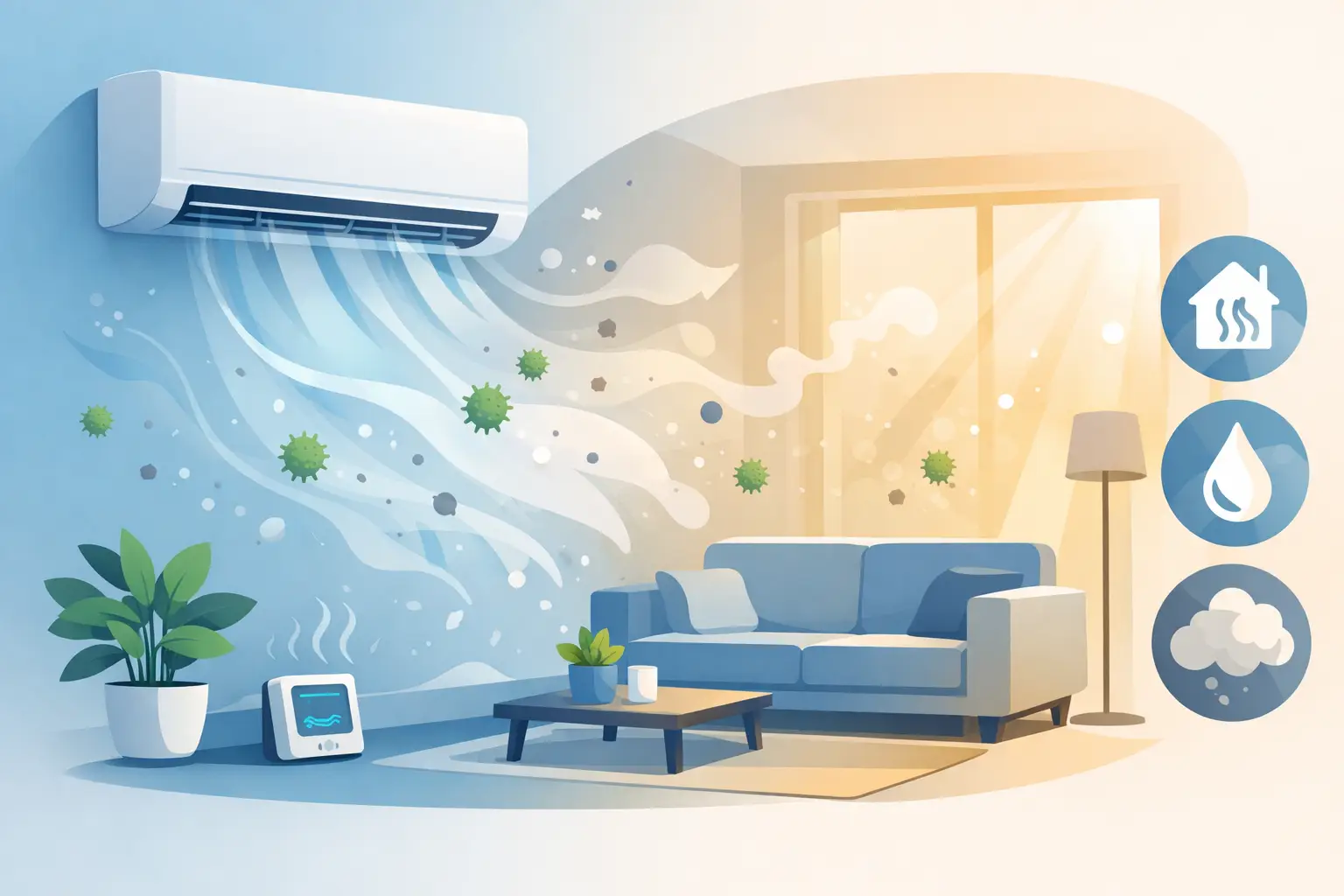
A home or workplace can look spotless and still have air that feels heavy, dusty, or irritating. In Dubai and across the UAE, indoor air quality is closely tied to how well an AC system, its filters, ductwork, and surrounding spaces are maintained. When the AC runs for much of the year, small maintenance gaps can affect comfort far more quickly than many property owners expect.
Poor air is not always obvious. It may show up as persistent odors, dust returning soon after cleaning, uneven cooling, excess humidity, or occupants experiencing dry throats, sneezing, headaches, and irritated eyes. These symptoms can have several causes, so a professional inspection is often the best way to identify the real issue rather than treating only what is visible.
Why Indoor Air Quality Matters in UAE Properties
Most people spend the majority of their day inside their home, office, shop, or building. That makes the condition of indoor air a practical comfort and maintenance concern, not just a cleaning preference. In tightly cooled spaces, air can circulate repeatedly through the same system. If filters are overloaded, ducts contain dust buildup, or moisture is not managed properly, contaminants may continue moving through occupied rooms.
For homeowners, this can affect sleep, comfort, and the general feeling of cleanliness in the property. For landlords and property managers, it can lead to tenant complaints, recurring AC performance issues, and faster wear on equipment. In commercial settings, stale or dusty air can make offices and customer-facing spaces less pleasant for staff and visitors.
Air quality also has a cost element. A neglected filter or dirty coil can restrict airflow, making an AC unit work harder to reach the selected temperature. That can increase energy use while delivering weaker cooling. Regular maintenance helps protect both comfort and system efficiency.
The Most Common Causes of Poor Indoor Air Quality
Indoor air problems rarely come from one source alone. In many properties, several smaller issues build up over time.
Dirty AC Filters and Coils
Filters are designed to capture airborne dust and particles before they enter deeper parts of the AC system. When they become clogged, airflow drops and the system may circulate less effectively. In dusty environments, filters can need attention more frequently than the schedule recommended for milder climates.
Dirty evaporator coils can create a similar problem. Dust on the coil reduces heat transfer, which affects cooling performance and may contribute to condensation issues. A trained technician can inspect the system, clean the relevant components safely, and confirm that airflow is balanced.
Dust and Debris in Ductwork
Ducts are out of sight, so they are easy to overlook. Over time, they can collect dust, construction residue, lint, and other particles. This is particularly common after renovation work, painting, moving into a new property, or long periods without professional AC maintenance.
Duct cleaning is not a substitute for addressing every air-quality concern. However, when there is confirmed buildup, visible dust around vents, recurring musty odors, or an extended history of neglected maintenance, it can be a sensible part of a broader solution. The key is to inspect first and clean where there is a clear need.
Moisture, Leaks, and Humidity
Moisture changes the indoor environment quickly. A plumbing leak behind a wall, condensation around AC components, poor drainage, or a bathroom exhaust issue can create damp areas that lead to musty smells and surface damage. In some cases, moisture can support mold growth.
The right response depends on the source. Cleaning a stained surface without fixing the leak only delays the problem. A proper assessment should identify where moisture is coming from, repair it, dry the affected area, and check whether damaged materials need further attention.
Everyday Indoor Pollutants
Cooking fumes, scented products, cleaning chemicals, pet dander, smoking, furniture emissions, and outdoor dust brought in through doors and windows can all affect the air inside. This does not mean every product or activity must be avoided. It means ventilation, sensible product choices, and routine cleaning matter.
Strong fragrances can mask an odor without resolving its cause. If an AC vent smells musty, an unusual odor returns after cleaning, or the air feels stale only when the system is operating, the AC and ventilation setup should be checked.
Practical Steps to Improve Indoor Air Quality
A reliable approach combines household habits with planned technical maintenance. Start with the basics, then bring in professional support when the issue involves AC components, ductwork, electrical ventilation, leaks, or persistent odors.
Keep air vents open and unobstructed by furniture, curtains, or storage. Blocked vents can affect circulation and create uneven temperatures between rooms. Vacuum and dust around supply and return vents regularly, using a soft brush attachment so grilles are not damaged.
Replace or clean AC filters according to the system type and the conditions inside the property. Homes with pets, frequent cooking, nearby construction, or high occupancy may need more frequent filter checks. A filter that looks gray, packed with dust, or visibly bent should not be left in place simply because a calendar date has not arrived.
Use exhaust fans when cooking or showering, and allow them to run long enough to remove steam and odors. If an exhaust fan is noisy, weak, or not operating, arrange a repair rather than assuming it is a minor inconvenience. Effective extraction helps control moisture where it begins.
For routine cleaning, focus on surfaces that trap dust: upholstery, rugs, curtains, mattresses, and the tops of cabinets. Deep cleaning can be especially useful after construction work, before moving into a property, or when a unit has been vacant for a long period. Avoid overusing harsh products in closed rooms, and allow fresh air circulation where outdoor conditions permit.
When AC Maintenance Should Be a Priority
A working AC unit is not automatically a well-maintained AC unit. Cooling may continue even when filters are dirty, drainage is partly blocked, or airflow is reduced. Waiting for a complete breakdown can turn a manageable service visit into an urgent repair.
Schedule an AC inspection if you notice weak airflow, rooms that cool unevenly, repeated dust around vents, water dripping from an indoor unit, unusual noises, rising energy bills, or odors when the system starts. These signs do not always point to the same fault, but they all deserve attention.
Professional AC maintenance typically includes inspection of filters, coils, drainage, electrical connections, cooling performance, and key mechanical components. Depending on the property and findings, duct cleaning, drain-line treatment, or repairs may also be recommended. Clear communication matters here: you should understand what was found, what work is needed now, and what can be planned for later.
For properties with multiple systems, annual maintenance contracts can make this easier to manage. Regular visits help identify developing problems before peak summer demand, while giving homeowners and facilities teams one point of contact for AC, plumbing, electrical, and cleaning needs. Dynafix Technical Services LLC supports this kind of planned care with qualified technicians and practical maintenance solutions for residential and commercial properties.
A Better Way to Respond to Persistent Air Problems
If poor air quality keeps returning, avoid relying on a single quick fix. Replacing a filter may help, but it will not resolve a hidden leak. Duct cleaning may reduce dust, but it will not correct a weak exhaust fan or a poorly draining AC unit. The most cost-effective solution is usually a targeted diagnosis followed by the right combination of cleaning, repair, and preventive maintenance.
Take note of when the problem occurs. Does an odor appear only when the AC turns on? Is one room dustier than the others? Does the issue worsen after showering, cooking, or heavy rain? These details help a technician investigate efficiently and prevent unnecessary work.
A comfortable property should feel clean, cool, and easy to live or work in. Regular attention to filters, ventilation, moisture control, and AC performance gives you a practical way to protect that comfort before small air-quality concerns become larger maintenance problems.