
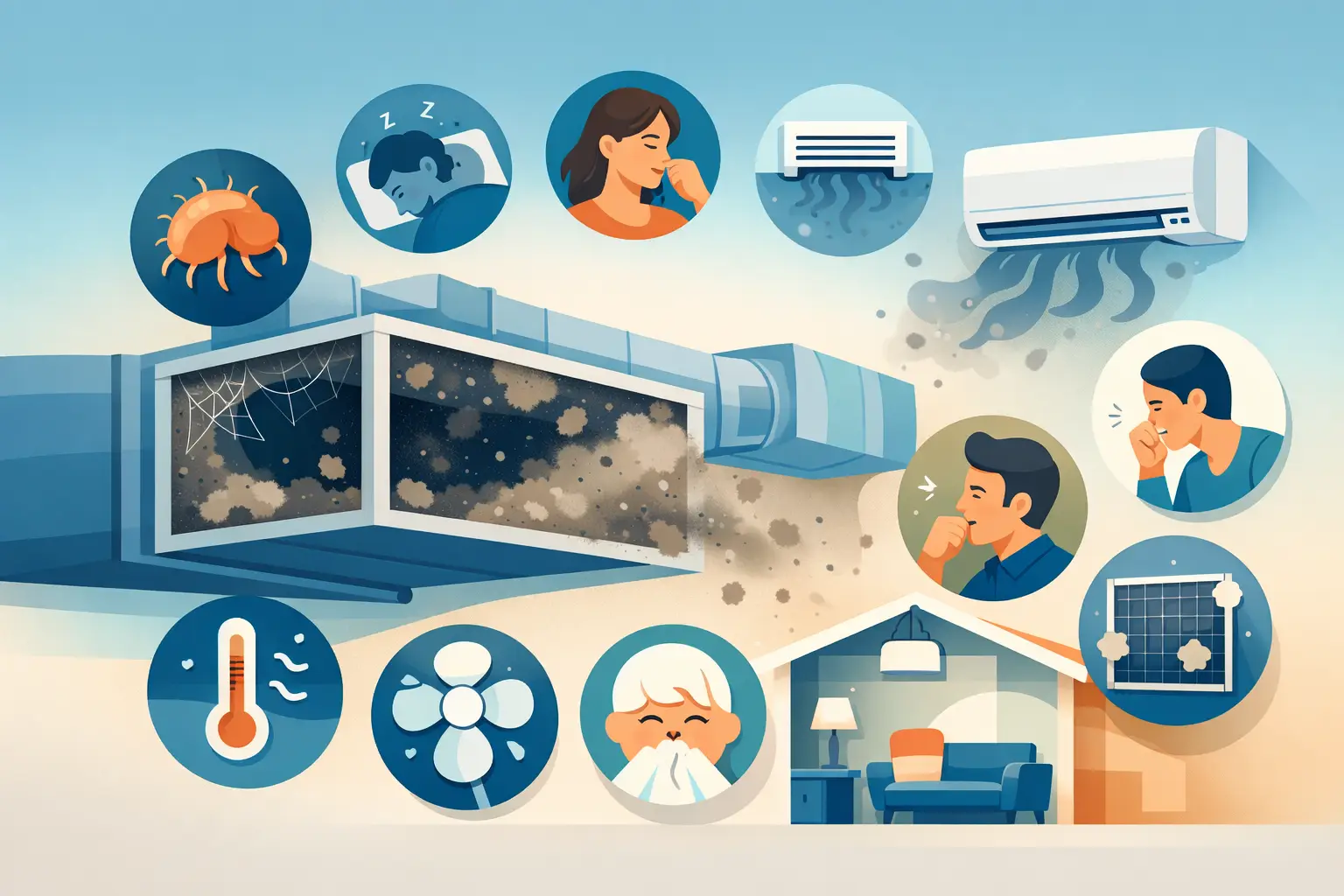
A freshly cleaned room can still feel dusty within a day or two when buildup is circulating through the AC system. The most useful signs AC ducts need cleaning are usually not dramatic. They show up as recurring dust, stale odors, uneven comfort, or debris around supply vents. In a home, office, or retail space, paying attention early can help protect indoor comfort and prevent small maintenance concerns from becoming bigger disruptions.
9 Signs AC Ducts Need Cleaning
1. Dust quickly returns after cleaning
If you wipe down furniture, shelves, and floors only to find a noticeable layer of dust again soon afterward, your ductwork may be contributing to the problem. Dust enters an AC system through return vents and can settle inside ducts over time, especially when filters are neglected or the property is exposed to outdoor dust.
This does not automatically mean the ducts are the sole cause. Open windows, construction nearby, pets, rugs, and high foot traffic also increase indoor dust. But when dust appears most heavily near vents or returns quickly despite regular cleaning, an inspection is sensible.
2. There is a musty or stale odor when the AC starts
A brief smell after the system has been off for a while can come from moisture around the evaporator coil or drain pan. However, persistent musty, dusty, or stale odors can indicate that dirt, moisture, or organic material has accumulated in parts of the air distribution system.
Do not mask the smell with air fresheners and assume the issue is resolved. A qualified technician should identify whether the odor comes from ducts, the coil, the drain line, insulation, or another part of the AC unit. The right solution depends on the source.
3. You can see dust or debris around vent covers
Remove a vent grille and look just inside with a flashlight. A light coating of dust is common, but thick buildup, loose debris, or dark residue deserves attention. The same applies when supply vents blow visible dust onto nearby walls, curtains, or furniture.
Visible debris does not reveal the full condition of the duct system, but it is a practical reason to schedule a professional assessment. Cleaning only the vent cover may improve appearance without addressing buildup farther inside the system.
4. Airflow feels weaker in certain rooms
Weak airflow can make a bedroom, office, or meeting room feel warmer than the rest of the property. In some cases, restricted ducts or clogged registers contribute to the issue. In others, the cause may be a dirty air filter, a blower problem, closed dampers, duct leakage, poor system sizing, or a thermostat concern.
Because several faults can create the same symptom, duct cleaning should be part of a proper diagnosis rather than a guess. A technician can check airflow, inspect accessible duct sections, and determine whether cleaning, repair, or AC maintenance will make the real difference.
5. Family members or occupants notice more irritation indoors
Frequent sneezing, throat irritation, itchy eyes, or allergy symptoms can be frustrating, particularly when they seem worse indoors. Dust, pet dander, and other particles can collect in an AC system and recirculate if filtration and housekeeping are not keeping pace.
Duct cleaning may help reduce accumulated debris, but it is not a medical treatment or a guarantee against allergies. The best approach can include regular filter replacement, coil and drain maintenance, moisture control, and professional cleaning when the system shows clear buildup.
6. The property has recently been renovated
Drywall dust, wood particles, paint residue, and general construction debris can travel farther than expected during renovation work. Even if vents were covered, dust may enter through returns or gaps while walls are opened, floors are cut, or furniture is moved.
After a remodeling project, a post-construction duct inspection is often worthwhile. This is especially true before moving into a newly completed space or reopening a commercial area to staff and customers. Fine construction dust can continue to circulate long after the visible cleanup is finished.
7. There are signs of pests near vents or returns
Droppings, nesting materials, insect activity, or unusual odors near air vents should be addressed promptly. Ductwork can provide hidden pathways for pests, particularly where damaged screens, unsealed openings, or gaps around penetrations exist.
Cleaning is only one part of the remedy. The source of entry must also be located and sealed, and pest control may be needed before the duct system is cleaned. Otherwise, the issue can return soon after service.
8. You see unexplained dark marks or residue
Dark marks around vents can be caused by ordinary dust sticking to moisture, air leaks around the grille, or soot from candles and cooking. They are not, by themselves, proof of mold. Still, discoloration inside ducts, on insulation, or around supply registers should be professionally evaluated, especially if it is accompanied by a persistent odor or water-related issue.
If microbial growth is suspected, the priority is finding and correcting the moisture source. Cleaning without solving condensation, drainage, or humidity problems is unlikely to provide a lasting result.
9. Your AC maintenance has been delayed for too long
Duct cleanliness is connected to the overall health of the AC system. Filters that have not been changed, clogged drain lines, dirty coils, and poorly maintained air handlers can all allow more dust and moisture to affect the air moving through your property.
If routine AC service has been postponed for a year or more, it is a good time to assess the full system instead of focusing on one component. A combined inspection can identify whether duct cleaning is necessary and help restore efficient, reliable operation.
When Duct Cleaning Is Worth Scheduling
Duct cleaning is most valuable when there is visible buildup, a recent renovation, pest contamination, persistent dust problems, or a confirmed issue involving moisture and debris. It can also be appropriate when a property has changed occupants after a long vacancy, particularly if the AC has been unused or poorly maintained.
It is not always needed on a fixed annual schedule. A well-maintained system with clean filters and no signs of contamination may not require frequent duct cleaning. The condition of the system, the type of property, local dust exposure, pets, occupancy levels, and recent construction work all matter.
For landlords and property managers, an inspection between tenancies can be a practical way to assess indoor cleanliness before new occupants move in. For offices and retail spaces, cleaning may be scheduled around renovation work, seasonal maintenance, or recurring comfort complaints from employees and customers.
What Professional AC Duct Cleaning Should Include
A proper service begins with an inspection, not a promise that every problem is caused by dirty ducts. The technician should assess accessible ducts, vents, return grilles, filters, and relevant AC components before recommending work.
During cleaning, trained professionals protect nearby furnishings and use suitable equipment to remove accumulated dust and debris from duct pathways. Vent covers and return grilles should be cleaned, while the air handler, filter area, coil condition, and drainage system may also need attention depending on the inspection findings.
Be cautious of services that offer unusually low prices without explaining what is included. Effective duct cleaning takes time, appropriate equipment, and access to the system. Clear scope, transparent pricing, and a technician who explains the condition of your AC are better indicators of value than a quick, one-size-fits-all offer.
Keep Ducts Cleaner Between Visits
The simplest habit is to replace or clean AC filters on the schedule recommended for your system and property conditions. Homes with pets, frequent outdoor dust exposure, or heavy AC use may need more frequent filter checks. Keep supply and return vents unobstructed, and avoid storing items directly against return air openings.
Regular AC maintenance also matters. Cleaning coils, checking drain lines, inspecting insulation, and confirming proper airflow can reduce the conditions that allow dust and moisture to build up. For properties that need multiple services, a planned maintenance arrangement can make it easier to keep AC, electrical, plumbing, and general upkeep from being overlooked.
If your space feels dusty, smells stale, or no longer cools as evenly as it should, do not settle for temporary fixes. A professional inspection can clarify whether your ducts need cleaning or whether another AC issue is affecting your comfort.