
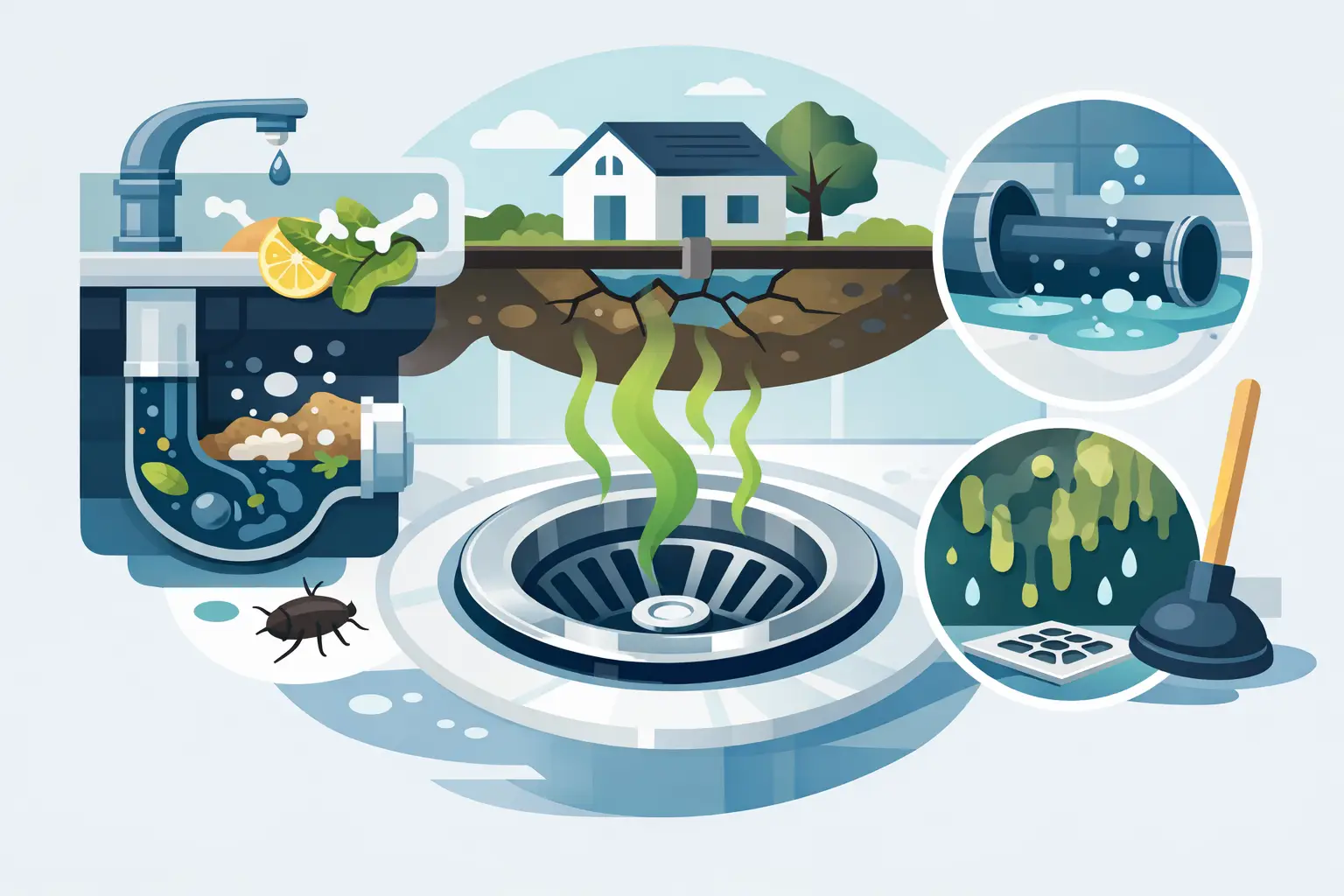
A clean kitchen or bathroom can still develop an unpleasant sewer-like smell overnight. Understanding what causes drain odors helps you act before a minor plumbing issue becomes a blockage, leak, pest concern, or disruption for the people using your property.
The smell may come from one fixture, such as a guest bathroom sink, or travel through several rooms. That difference matters. Some drain odors have a simple fix, while others point to a problem inside the drainage system or vent piping that needs a qualified plumber to investigate.
What Causes Drain Odors in Homes and Businesses?
Drains are designed to move wastewater away while keeping sewer gases out of occupied spaces. When water flow, pipe seals, cleanliness, or ventilation are compromised, odors can enter the room. The smell itself is not always dangerous, but persistent odors should not be ignored – especially in kitchens, bathrooms, laundry rooms, utility areas, restaurants, offices, and vacant properties.
1. A dry P-trap
Most sinks, showers, floor drains, and tubs have a curved section of pipe called a P-trap. It holds a small amount of water that creates a seal between the room and the sewer line. If a fixture has not been used for days or weeks, especially in a spare bathroom, an empty apartment, or a rarely used floor drain, that water can evaporate.
Once the trap is dry, sewer gases can rise through the drain. The practical solution is often to run water into the drain for a minute or two. For floor drains and rarely used fixtures, adding water periodically is a simple preventive habit. If the odor returns shortly after doing this, the trap may be leaking, siphoning out, or connected to a larger venting issue.
2. Organic buildup inside the drain
Kitchen, bathroom, and laundry drains collect residue over time. Grease, soap scum, hair, food particles, toothpaste, skin oils, and detergent can form a sticky layer inside the pipe. Bacteria feed on that material and produce the musty, sour, or rotten odor many property owners notice near a drain opening.
This is especially common in slow-moving drains. Water may still go down, but the pipe wall is partially coated or beginning to clog. A removable stopper, strainer, or drain cover can also hold debris close to the surface, where it smells stronger.
Cleaning the visible components and flushing the drain with hot water may help. However, avoid repeatedly using harsh chemical drain cleaners. They can damage some pipes and seals, create hazardous fumes, and may not remove the buildup that is causing the odor. Mechanical cleaning or professional drain servicing is often the more dependable option for recurring smells.
3. A partial blockage
A partial blockage changes how wastewater moves through the pipe. Instead of flowing freely, waste and residue sit in the line longer. This can create odors before the drain becomes completely blocked.
In a sink, you may notice slow drainage, gurgling, or water backing up briefly. In a shower, water may pool around your feet. In a commercial property, repeated complaints from restrooms or pantry areas can indicate a shared line issue rather than a single dirty drain.
Hair and soap buildup are common in bathroom lines, while grease and food waste are frequent causes in kitchen plumbing. A professional can determine whether the problem is localized at the fixture trap or farther along the branch drain. That distinction prevents unnecessary repairs and helps ensure the blockage is fully cleared.
4. Grease in kitchen plumbing
Cooking oil, butter, sauces, and fats may look harmless when rinsed away with hot water. As they cool in the pipe, they can stick to the interior and trap food particles. Over time, the line develops a greasy film that smells rancid and restricts flow.
Garbage disposals can add to the problem when fibrous food scraps, coffee grounds, eggshells, or large amounts of food are sent through the unit. A disposal can grind waste, but it does not eliminate the need for correct food-waste handling.
Wipe oily pans before washing them, collect cooking grease in a suitable container, and use a sink strainer to catch food debris. If the smell is strongest when the disposal runs, the unit and its connected drain line may need a proper cleaning and inspection.
5. A dirty overflow channel
Bathroom sinks usually have a small opening near the top of the basin called an overflow. It prevents flooding if the sink fills too high, but it can also collect soap residue, moisture, and bacteria. Because the channel is hidden, it is easy to overlook during routine cleaning.
An odor that seems to come from a clean sink may actually be coming from this internal passage. A technician can clean the overflow channel as part of a thorough sink and drain service, particularly when ordinary surface cleaning has not resolved the issue.
6. Damaged seals, pipes, or drain connections
Not every drain odor is caused by dirt. A loose connection under a sink, a cracked pipe, a failed seal, or a damaged toilet wax ring can allow sewer gas or wastewater odors to escape. In some cases, there may be no visible water leak at first.
Look for damp cabinet bases, staining around pipe joints, soft flooring near a toilet, or an odor that becomes stronger after flushing or using a nearby fixture. These signs call for prompt attention. Left unresolved, a small leak can damage cabinetry, flooring, walls, and adjacent units.
7. Plumbing vent problems
Drainage systems need vent pipes to balance air pressure and carry sewer gases safely away from the building. When a vent is blocked, improperly installed, or damaged, water can be pulled out of a P-trap as other fixtures drain. This is called siphoning.
Gurgling sounds, bubbles in a toilet bowl, odors from more than one drain, and traps that repeatedly dry out can all suggest a venting problem. Vent diagnosis is not a DIY task. The issue may be on the roof, within a wall, or in a shared plumbing system, so professional assessment is the safest route.
8. Problems with the main sewer line
When multiple drains smell bad, drain slowly, or back up at the same time, the issue may be in the main sewer line. Tree roots, pipe scale, displaced pipe sections, accumulated waste, or a municipal sewer issue can interfere with drainage.
This situation requires faster action than a single smelly sink. Do not keep running water or flushing repeatedly if wastewater is backing up. Limit use of affected fixtures and arrange professional plumbing support. A qualified team can inspect the line, identify the location of the obstruction, and recommend the right repair or cleaning method.
How to Narrow Down the Source of a Drain Odor
Start by identifying where and when the odor appears. A smell from one unused shower often points to a dry P-trap. An odor that occurs after using the kitchen sink may point to food residue, grease, or a partial blockage. If the smell spreads across bathrooms, laundry areas, and floor drains, the cause may be more extensive.
Pay attention to related symptoms: slow drainage, gurgling, standing water, recurring clogs, water stains, or odors that intensify after flushing. These details help a plumbing technician diagnose the issue efficiently and communicate the repair scope clearly.
For a simple first check, run water into unused drains and clean accessible strainers and stoppers. Do not mix cleaning products, acids, bleach, or chemical drain openers. Combining products can release dangerous fumes, and chemicals may make professional repair work less safe.
When to Call a Plumbing Professional
A one-time odor from an unused drain may be resolved by restoring water to the trap. Persistent smells, however, deserve a closer look. Arrange professional service if the odor returns quickly, several drains are affected, water drains slowly, pipes are leaking, or sewage backs up into a sink, shower, or floor drain.
For landlords, facility managers, and business owners, early service also protects the comfort of tenants, staff, and customers. Drain odors can affect hygiene perceptions long before a plumbing failure becomes visible. Scheduled maintenance helps remove buildup, identify weak connections, and reduce avoidable emergency callouts.
Dynafix Technical Services can help assess drain odors, clear obstructions, repair plumbing faults, and keep residential or commercial systems functioning reliably. A clear diagnosis and quality workmanship give you the confidence to use your space comfortably again.
If a drain smell keeps returning, treat it as useful information from your plumbing system. Addressing it early is usually cleaner, less disruptive, and more cost-effective than waiting for the next backup.